
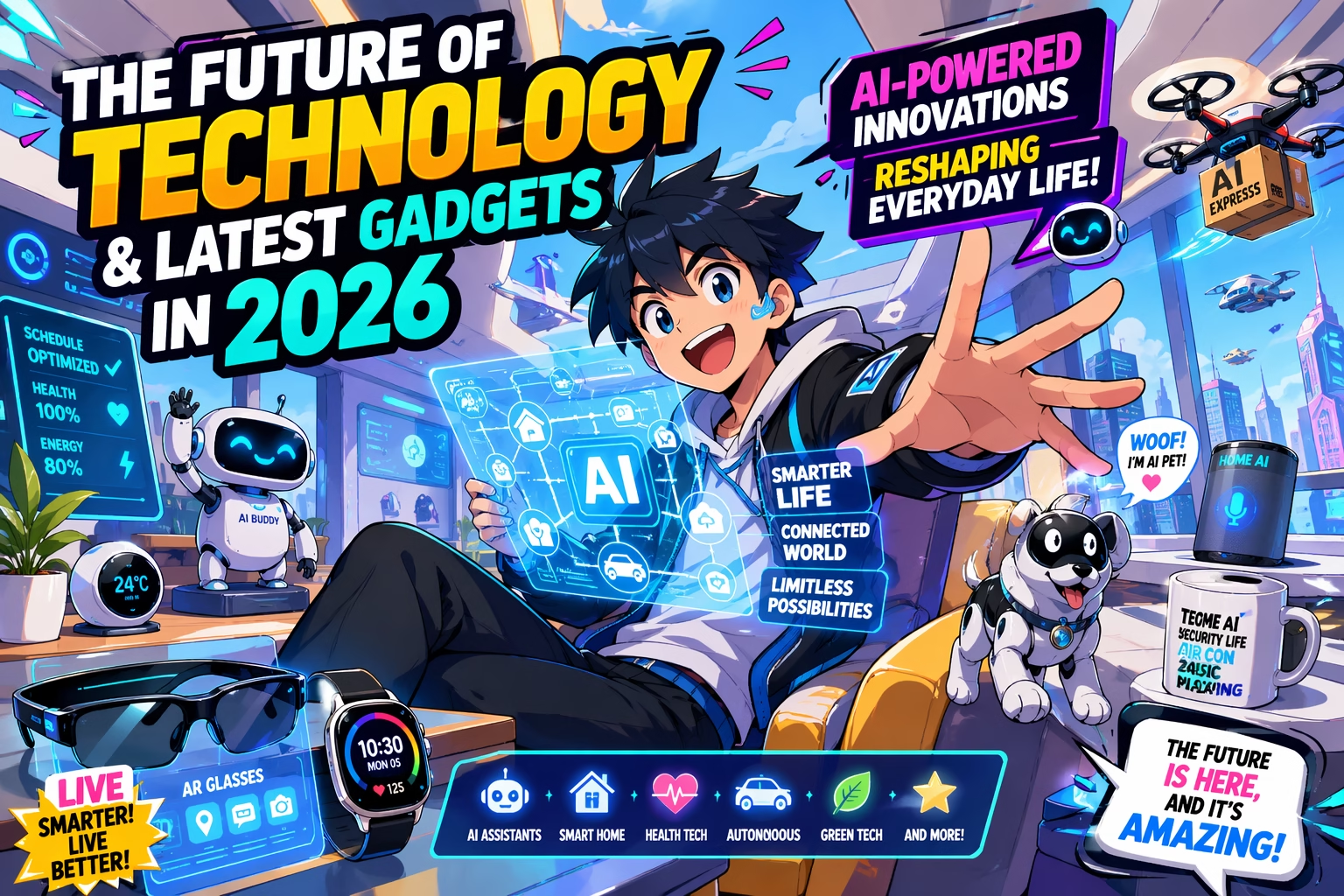
Discover the future of technology trends and gadgets in 2026, including AI wearables, smart homes, robotics, and future innovations transforming everyday life, Future of Technology here
The New Era of Intelligent Technology
The technology landscape in 2026 is undergoing one of the most significant transformations in modern history. Unlike previous years, where upgrades were incremental — better cameras, faster processors, longer battery life — the current wave of innovation is fundamentally different.
Today, technology is no longer just improving — it is evolving.
Devices are becoming intelligent. Systems are becoming autonomous. Gadgets are no longer passive tools; they are active participants in our daily lives.
According to recent industry analysis, AI-powered hardware, advanced wearables, and smart ecosystems are defining the current wave of innovation (thesecrettrends.com). From AI assistants that anticipate your schedule to wearables capable of detecting health issues before symptoms appear, the shift is profound.
This article explores the most trending technology and latest gadgets in 2026, explains how they work, and reveals what you should expect next — all while aligning with real search intent and SEO best practices.
 For more tech insights and deep-dive articles, visit
https://cybernov.site
1. Artificial Intelligence: The Foundation of Modern Technology
Artificial Intelligence (AI) is not just another trend its the Future of Technology— it is the backbone of nearly every innovation in 2026.
What makes AI different today is its level of integration. It is no longer limited to chatbots or recommendation engines. Instead, it is embedded into hardware, software, and entire ecosystems.
Why AI Dominates Technology Trends
Several key factors explain why AI is leading:
It enables predictive decision-making
It personalizes user experiences
It automates complex workflows
It improves efficiency across industries
Experts now describe AI as “everyday infrastructure,” meaning it powers everything from apps to devices (KULFIY.COM).
Real-World Example
Consider how your smartphone works today or what is the :
It predicts what you will type next
It organizes your photos automatically
It suggests actions based on behavior
These are not isolated features — they are part of a larger AI ecosystem.
The Rise of AI Agents
A major breakthrough in 2026 is the emergence of AI agents — systems that can plan, reason, and execute tasks independently.
These agents are being used for:
Customer support automation
Workflow management
Research and data analysis
This marks the transition from AI as a tool to AI as a digital worker.
2. AI Wearables: The Most Explosive Gadget Trend of 2026
If there is one category dominating the “latest gadgets 2026” search results, it is AI wearables.
Wearable technology has evolved far beyond step counting. Today’s devices offer continuous health monitoring, predictive insights, and real-time assistance.
What Makes AI Wearables Revolutionary
Unlike traditional devices, AI wearables:
Analyze data continuously
Provide actionable insights
Operate in real time
Learn from user behavior
Modern wearables can even detect early signs of illness days before symptoms appear (thesecrettrends.com).
Types of AI Wearables
Smart Rings
Small, lightweight, and powerful — these devices track sleep, stress, temperature, and more.
AI Smart Glasses
One of the most disruptive gadgets:
Real-time translation
Navigation overlays
Object recognition
Many experts believe these could eventually replace smartphones (Best Technology And Gadgets Reviews –).
AI Earbuds
Beyond music, these devices:
Translate languages instantly
Provide voice-based assistance
Summarize conversations
Why This Trend Is Growing
Consumers are moving away from screens and toward seamless, hands-free technology.
3. Smart Homes: From Automation to Intelligence
Smart homes in 2026 are no longer about remote control — they are about autonomous living environments.
Evolution of Smart Homes
Old systems:
Required manual input
Operated on fixed schedules
Modern systems:
Learn user habits
Predict needs
Act automatically
What Smart Homes Can Do Today
Adjust lighting based on mood
Optimize temperature for comfort
Manage appliances intelligently
Enhance security using AI
These systems are powered by AIoT (Artificial Intelligence + Internet of Things), which allows devices to communicate and learn from each other (TechTarget).
Real-Life Example
You wake up in the morning:
Curtains open automatically
Coffee starts brewing
News briefing plays
Temperature adjusts
This is not futuristic — it is already happening.
4. Edge AI: The Shift Toward On-Device Intelligence
One of the most important but less visible trends is Edge AI.
What Is Edge AI?
Edge AI refers to processing data locally on a device instead of sending it to the cloud.
Why It Matters
Faster response times
Better privacy
Reduced internet dependency
In fact, modern devices are becoming so powerful that experts predict users could soon carry the computing power of a supercomputer in their pocket (TechRadar).
Real Impact
This enables:
Instant voice translation
Real-time video processing
Offline AI assistants
5. Robotics and AI Companions
Robotics is rapidly entering everyday life.
Recent developments show companies building AI-powered companion robots designed for home environments (The Times of India).
Applications
Home assistance
Elder care
Customer service
Personal companionship
Why This Matters
Robots are evolving from tools into interactive systems capable of understanding and responding to human behavior.
6. Next-Generation Smartphones and Smart Devices
Smartphones are still central, but they are changing rapidly.
Key Features in 2026
On-device AI assistants
Real-time translation
AI-enhanced cameras
Personalized interfaces
Modern smartphones are becoming AI-first devices, designed around intelligence rather than apps (HelpofTech – The Ultimate Guide to Tech).
7. Health Tech: Preventive and Personalized
Health technology is one of the most impactful areas of innovation.
Key Advancements
Continuous biometric monitoring
Predictive health insights
AI-driven wellness recommendations
Instead of treating illness, technology is now focused on prevention and early detection.
Why This Matters
This shift has the potential to:
Reduce healthcare costs
Improve quality of life
Enable early intervention
8. The Rise of AI-Powered Ecosystems
The biggest shift in 2026 is not individual devices — it is connected ecosystems.
What This Means
Devices are no longer standalone. They work together.
Example:
Your wearable tracks your sleep and this is Future of Technology.
Your phone analyzes the data
Your home adjusts your environment
This creates a seamless experience across all devices.
9. Future Gadgets: What’s Coming Next
The next wave of innovation is already underway.
Emerging Technologies
Smart glasses replacing phones
Brain-computer interfaces
Context-aware computing
AR-powered environments
Experts predict that computing will move from screens to ambient environments.
10. Challenges and Risks
Despite its benefits, technology also presents challenges.
Key Concerns
Data privacy
AI ethics
Cybersecurity
Over-dependence
Balancing innovation with responsibility is critical.
Conclusion: The Future Is Intelligent, Connected, and Personal
The latest technology trends and gadgets in 2026 are not just about innovation — they are about transformation.
We are moving toward a world where:
Devices understand us
Systems anticipate our needs
Technology becomes invisible
The question is no longer what technology can do — but how it will reshape human life.
For businesses, creators, and users, this is an opportunity to adapt, innovate, and stay ahead.
FAQs
What are the latest technology trends in 2026?
AI, wearable technology, smart homes, robotics, and edge computing are leading trends.
What are the most popular gadgets in 2026?
AI wearables, smart home devices, and AI-powered assistants.
Will AI replace smartphones?
Not immediately, but wearables like smart glasses may reduce reliance on phones.